

The Great Loop, answered.
Frequently asked questions for the Great Loop — the boat, the bridges, the depth and the seasons.
Frequently asked.
Please see the frequently asked questions regarding the Great Loop, and enjoy learning more through the articles linked from the answers. Send your questions to us for answers.
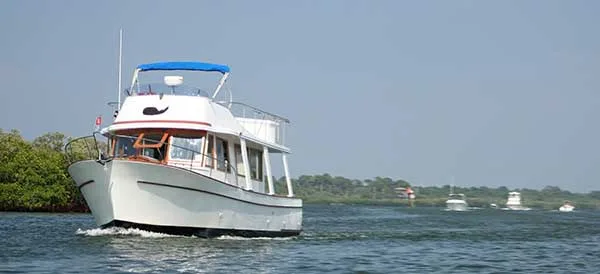
The best boat for the Great Loop is the best boat for your purposes. A trawler, motor yacht, cruiser, sailboat or houseboat may be best — it depends on your budget, the time you want to commit to the trip and your other needs. The most popular is a trawler, because of its comfort for the size and its fuel economy. If you are time-pressed and want to make any of the many side trips available, a motor yacht or cruiser would be best.
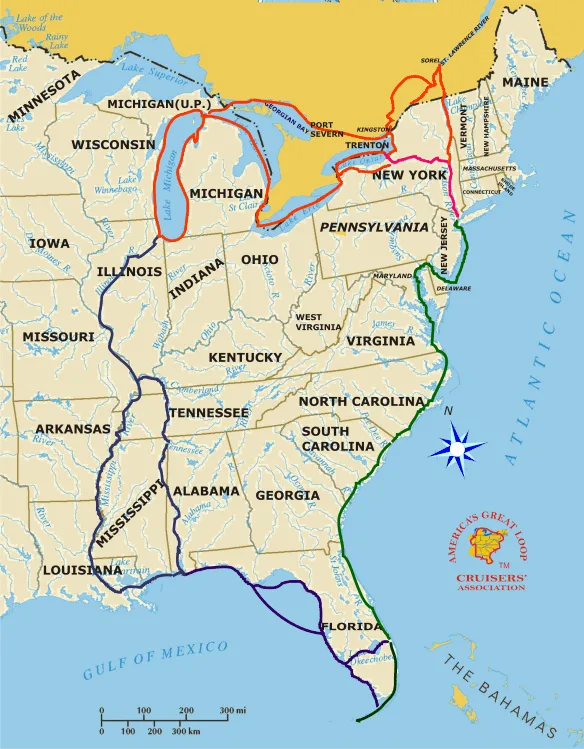
Yes. You would have to lower the mast(s) in Chicago and raise them again in the St. Louis area to continue down the Mississippi to New Orleans. If going up the Ohio River to the Tombigbee Waterway, you will have to wait until Mobile to raise the mast(s). In upstate New York you will need to unstep your mast(s) for the Erie Barge Canal.
At mile 300.6 on the Illinois River there is a fixed railroad bridge with a 19.7-foot vertical clearance. Some are able to negotiate this height restriction by lowering masts, radar arches, antennas and so on. Just be sure — it is a long way back through the Great Lakes!
Five feet or less is best. Any more and your trip may have to make detours around shoal areas — sometimes a few feet, sometimes many miles, or not at all.
Many people without boating experience have made the Great Loop after taking lessons from the United States Power Squadrons, another boater or a professional coach, or by learning locally before the Great Loop adventure.
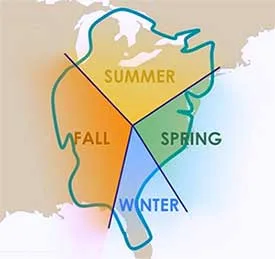
The easy answer is to travel with the seasons. The spring flooding on the Mississippi does not subside until fall, so it is best to wait until fall before entering the Illinois River at Chicago to start southward. Winter is best enjoyed in the southeast USA, with side trips to the Keys, the Bahamas or just traveling around Florida. Spring is the start of the trip north to the Mid-Atlantic states, with summer in the Great Lakes and Canada if so desired. Traveling with the good weather is always best.
Your travels will take you by cities, towns and marinas that have access for both internet and phone. Using your cell phone as a “hot spot” is what most Great Loopers use, or getting access ashore or anchored out. Get the complete rundown from our in-house internet expert Jim Healey — his article Data Security and the Internet is linked below.
You are in luck! Curtis Stokes and Associates specializes in Great Loop boats. Visit the CSA Great Loop Boats for Sale page to see boats grouped by type suitable for the Great Loop. Some of these boats are veterans of the Loop. If they have done it once, they can do it again with you.
There are so many! Summer: a cruise to New England, Long Island Sound, the northern lakes of New York, all the Great Lakes and Canada. Fall: the Mississippi River has many tributaries worth exploring if you have the power to push upstream — don't get caught out by the bad weather of late fall, though! Winter: all of the southeast US, the Florida Keys and the Bahamas are great places to explore, and for those with lots of time the lower Bahamas and the Caribbean are wonderful island destinations. You don't have to do the Loop in one cycle of a year's seasons; you can use as much time as you like. Spring: traveling up the east coast of the US, you are moving with an ever-greening landscape that is pleasing to the eye, and pleasant days and cool nights are part of the trip worth remembering. Attractions along the way: museums, nature preserves, interesting restaurants, city and town architecture, waterfronts and other points of interest — plan on stopping to see them.
Get the answers for all of this from Jim Healey's article Navigation Via PC or Tablet Computer, linked below.
Read the article Diesel Engine Maintenance, linked below.
Read the article Great Loop Cruising, linked below.
Read more
Send us your questions.
Contact us with your questions and inquiries — or see the boats suited to the Loop, some of them veterans of it.